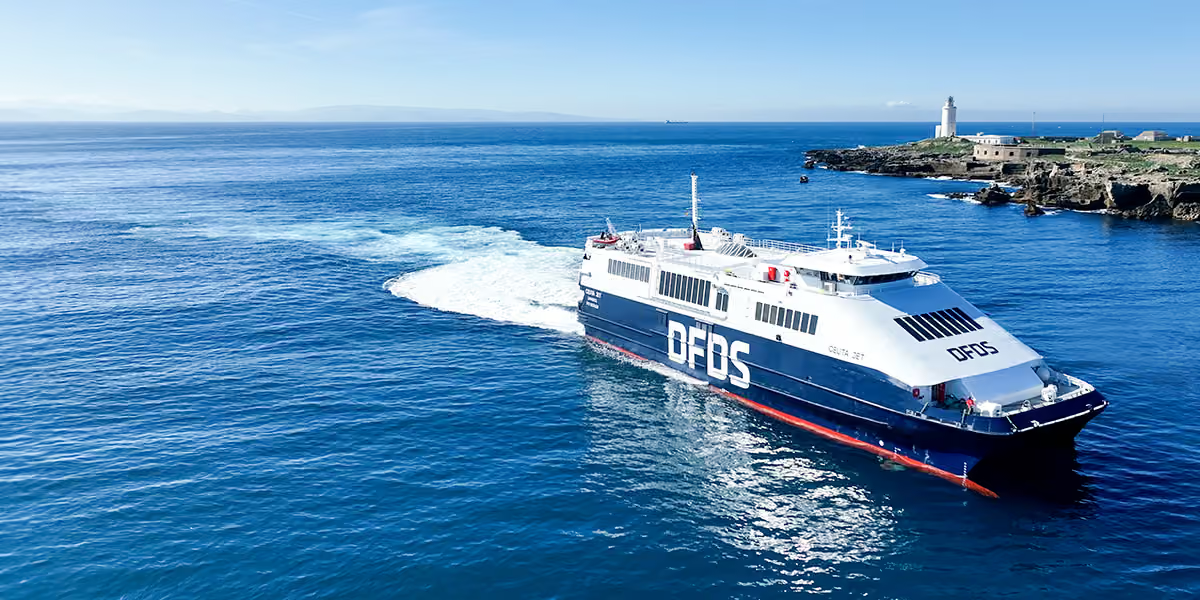
DFDS has expanded its ticket sales network between Casablanca and Tanger Med to help manage the large number of travellers expected during Operation Marhaba 2026. The Danish ferry company now has eight ticket offices on the route to Tanger Med. One of the main offices is in Ksar El Majaz, just outside the port. Travellers can buy, change or confirm their ferry tickets there before reaching the terminal.
Passengers can only enter the Tanger Med passenger terminal if they have a confirmed ticket for travel on the same day. Completing ticket checks before arriving at the port helps reduce traffic, avoid long queues and speed up boarding.
DFDS has also hired 160 extra staff to support the busy summer period. The new employees are working both at the port and on board the ferries.
Three Ro-Pax ferries are operating around the clock between Tanger Med and Algeciras during the peak season.
The company plans to run up to 16 crossings a day during the busiest weeks. The crossing of the Strait of Gibraltar takes between one hour and 30 minutes and two hours.
The fleet includes the Tanger Express and the Kattegat. A vessel like the Tanger Express can carry almost 1,000 passengers and 230 vehicles, including cars, caravans, trailers and freight trucks. Passengers also have access to children’s play areas, restaurants, lounges and duty-free shops.
DFDS was founded in Copenhagen in 1866. The company reported annual revenue of €4.1 billion and employs around 16,000 people worldwide.
Its business has two main parts. The ferry division operates routes across northern Europe, the United Kingdom, the Baltic Sea, the Mediterranean and the Strait of Gibraltar. The logistics division provides road transport, rail freight, cold chain services and warehousing.
DFDS has been expanding its business in the Strait of Gibraltar since buying the FRS Iberia/Maroc operations. The deal strengthened its position on ferry routes between southern Spain and northern Morocco.
The route has become more important as more European manufacturers move parts of their supply chains closer to Europe by shifting production to Morocco.