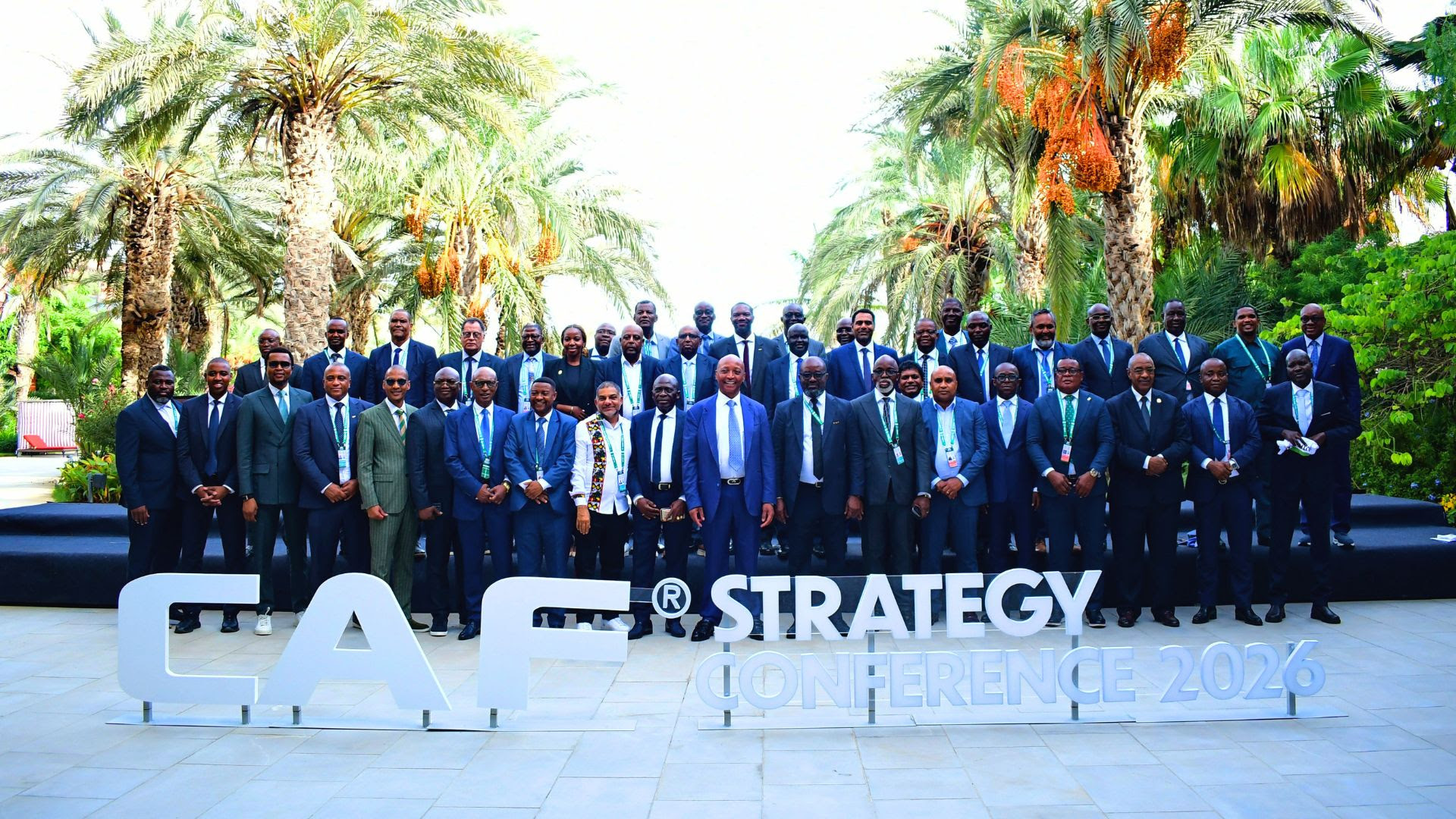
African football federations will receive up to $700,000 a year from the continent’s governing body, the Confederation of African Football (CAF), following a 33% increase announced by its president, Patrice Motsepe. The funding for each of CAF’s 54 member associations will rise from $525,000 to $700,000.
The increase is part of a wider package aimed at strengthening football development and administration across Africa.
The six regional football unions will receive $900,000 a year, up 20% from $750,000. Annual funding for the African Clubs Association (ACA) will increase by 25%, from $400,000 to $500,000.
CAF said the additional money would support youth and women’s competitions, football development structures, administration and governance. It would also help fund longer-term programmes for players, coaches, referees and other people involved in the game.
The grants are intended to help national federations maintain national teams, domestic leagues and youth academies, particularly those that rely on government subsidies to fund their activities.
The latest increase continues a series of funding rises since Motsepe took office in March 2021.
Member associations received $200,000 a year in 2021. The amount later increased to $400,000, then $525,000, before reaching up to $700,000 under the latest allocation.
CAF said the new level represented a 250% increase compared with 2021.
The organisation, founded in 1957, is responsible for administering and regulating football across Africa. Its 54 full member associations are grouped into six regional zones: North Africa, West Africa, Central Africa, East and Central Africa, and Southern Africa, with West Africa divided into two regional unions.
Motsepe, a South African businessman, became CAF president in March 2021. He ran unopposed after receiving the backing of FIFA leadership.
The funding increase comes as CAF continues efforts to improve its financial position following earlier deficits linked to legacy legal disputes. One major setback was the cancellation of a $1bn broadcasting contract with Lagardère Sports in 2019.
CAF has since pursued commercial restructuring aimed at reducing operating deficits and rebuilding cash reserves.
Its main sources of revenue include broadcasting rights and commercial sponsorships for major tournaments, particularly the Africa Cup of Nations (AFCON). Sponsorship has also grown through partnerships with companies in sectors including telecommunications, energy and banking.
The latest grants form part of a broader increase in financial support for African football.
CAF has raised the prize money for the AFCON winners to $7m, a 40% increase. Winners of the CAF Champions League now receive $4m. Funding for women’s competitions, including the Women’s Africa Cup of Nations and the Women’s Champions League, has also expanded as the organisation seeks to support the professional development of the women’s game.
The funding increases are subject to oversight measures designed to ensure that the money is spent on its intended purposes.
National federations must submit audited financial statements and dedicated development budgets to qualify under the compliance requirements. These measures are intended to reduce the risk of funds being diverted from football development.
AFCON in Morocco generates $192.6m in revenue
The Africa Cup of Nations (AFCON) held in Morocco generated approximately $192.6m in gross revenue for CAF, according to the financial figures provided.
After operational expenses and organisational costs, the tournament was projected to deliver a net profit of $113.8m.
Broadcasting and media rights accounted for the largest share of commercial income. Corporate sponsorships and marketing partnerships were also major revenue sources, while ticket sales and matchday hospitality generated about $20m across the tournament.