Four student-led health technology startups have been selected for scientific and business support at Mohammed VI Polytechnic University (UM6P) in Benguerir, Morocco. The four projects were chosen at the end of the university’s first Ibtikar & Wikaya innovation programme. They cover four areas: biotechnology, Parkinson’s disease diagnosis, artificial intelligence for medical imaging and access to home healthcare.
BIOTEX aims to produce biotechnological reagents locally for medical and research laboratories. These substances are used in laboratory tests and experiments. Local production could reduce reliance on imported supplies and help laboratories maintain access to essential materials.
LRRKIT is developing an affordable test kit to detect biomarkers associated with Parkinson’s disease, which affects the nervous system. Its approach includes looking for biological markers linked to the condition, such as variants of the LRRK2 gene. The aim is to make specialised testing more accessible and potentially help identify the disease earlier.
RADCHECK uses artificial intelligence to check the quality of chest X-rays. Poor-quality images can require patients to undergo another scan. The project aims to reduce repeat imaging and unnecessary exposure to ionising radiation while improving clinical workflows.
SHIFAA ASSISTANCE is developing a digital platform to make home healthcare more accessible, particularly for people living in remote or underserved areas. Its proposed services include arranging home nursing and medical visits, remote consultations and other medical support.
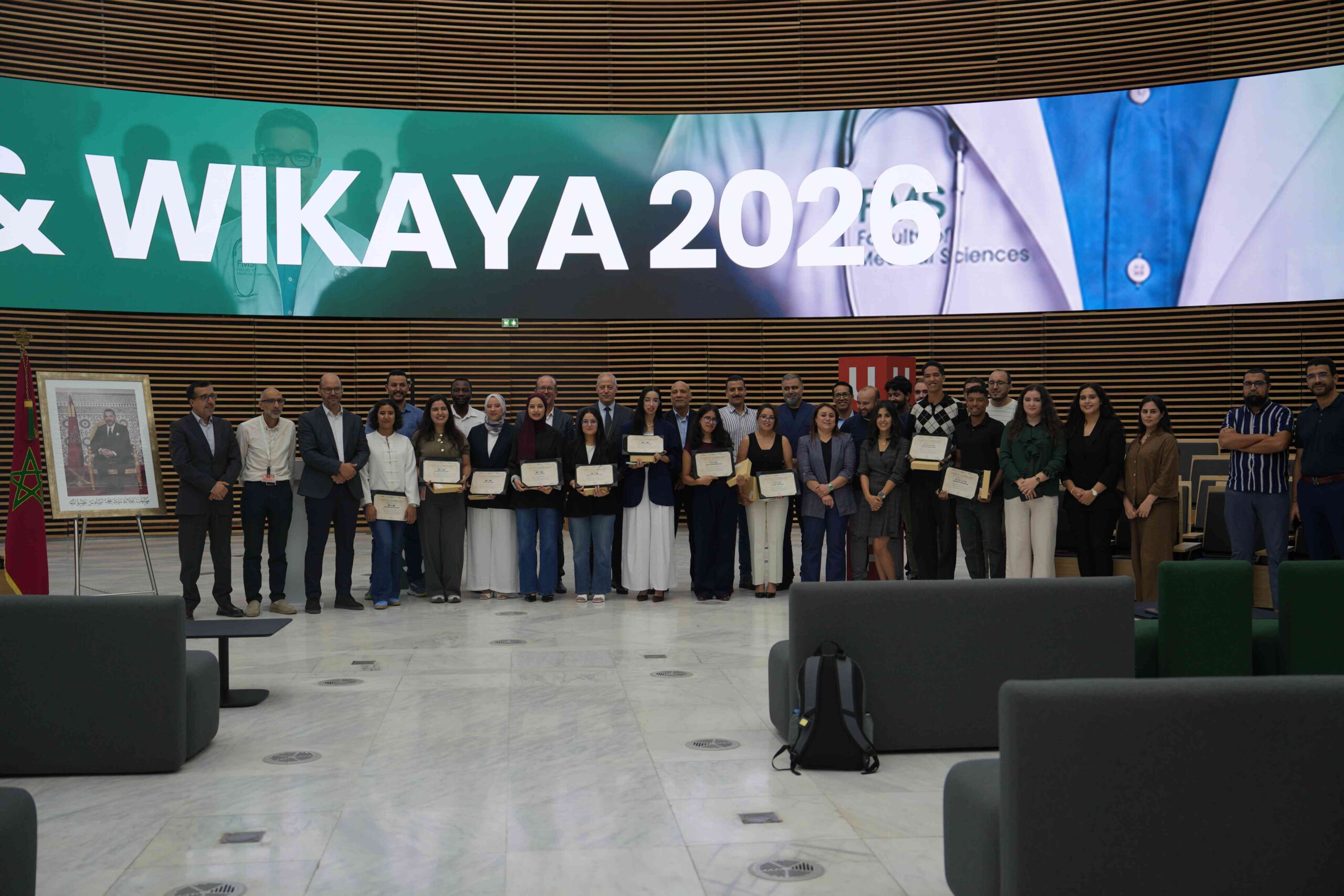
The programme was launched on 31 March 2026 by UM6P’s Faculty of Medical Sciences (FMS), with support from the OCP Foundation and the university’s Entrepreneurship Academy.
More than 200 students from medicine, pharmacy, nursing and doctoral studies took part. They formed 20 project teams, of which nine reached the final stage and presented their ideas to an expert jury. The finalists received training and mentorship before their presentations.
The four winning startups will receive scientific and entrepreneurial support from the Faculty of Medical Sciences as they develop their projects.
The university is also planning to establish a dedicated bio-incubator to support healthcare and biotechnology startups.