
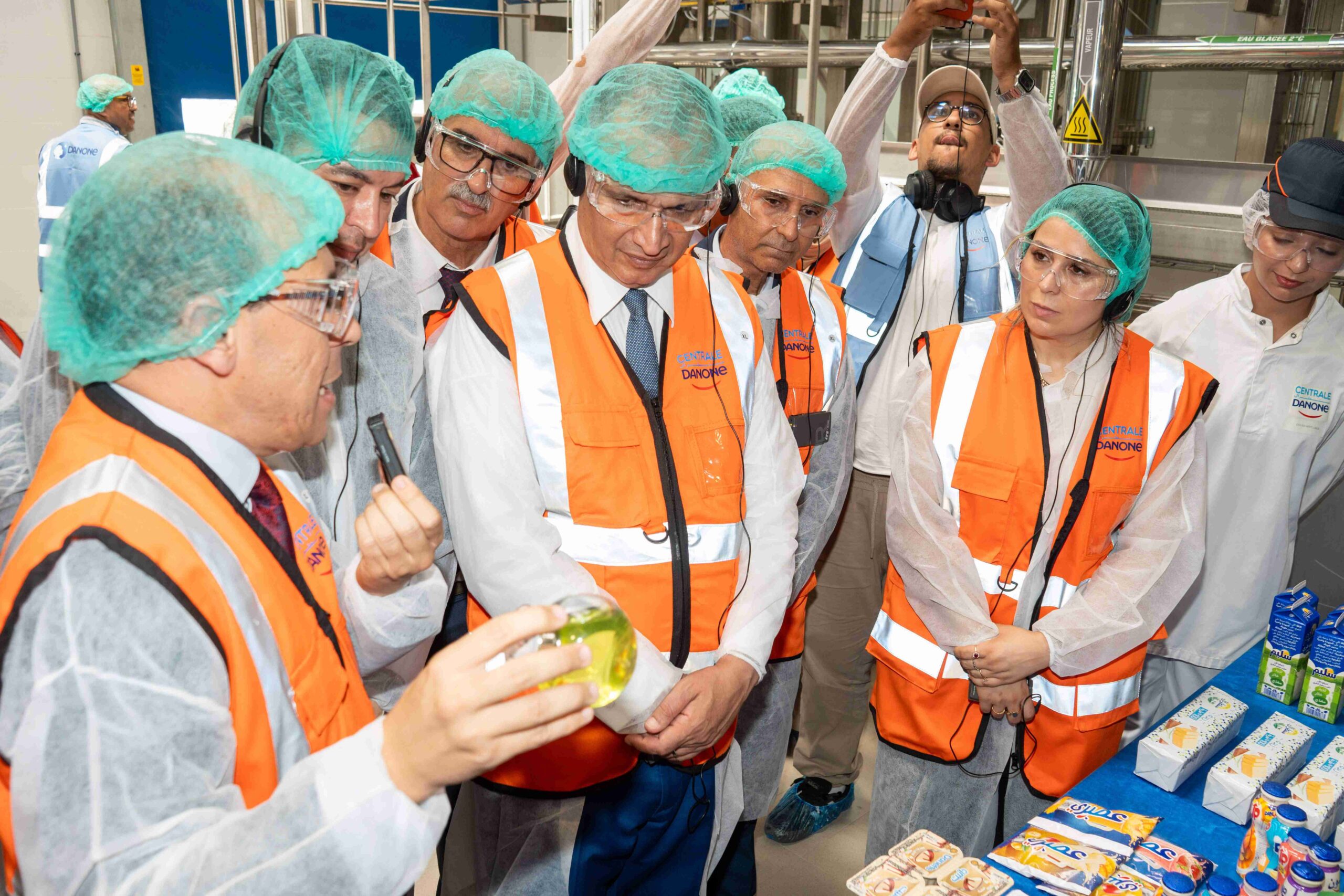
Morocco will be able to make more of its own dairy ingredients after Centrale Danone opened a new production line worth MAD 60.2 million at its factory in Fkih Ben Salah. The new facility, called Milk Co, will allow the company to extract proteins, lactose and minerals from fresh Moroccan milk instead of importing some of these ingredients from abroad.
The project was officially launched on Tuesday by Minister of Industry and Commerce Ryad Mezzour and Centrale Danone Chief Executive Imad Bakkali.
Morocco produces and processes about 1.8 billion litres of milk every year. However, some dairy products still rely on imported milk powders and specialised ingredients.
Centrale Danone said the new investment will help replace some of those imports with ingredients made from local milk. The ingredients will be used to produce yoghurt, cheese and high-protein dairy drinks.
The factory uses a process called Milk Cracking, which separates milk into different parts using advanced filtration instead of high heat.
The process has three stages. Microfiltration removes bacteria, fat and keeps casein proteins. Ultrafiltration concentrates whey proteins while separating water, minerals and lactose. Nanofiltration concentrates lactose and removes some minerals.
The company said the technology helps it get more value from every litre of milk while keeping its nutritional quality.
The project is also expected to support dairy farmers. Centrale Danone works with more than 40,000 farmers through a network of over 1,150 milk collection points and operates four factories across Morocco.
The company said the new system will create more stable demand for local milk. It will also help manage seasonal changes in milk production by storing milk ingredients during periods of high supply and using them later when production falls.
Centrale Danone said the new process will also reduce waste, cut emissions linked to imported ingredients and improve water use.