
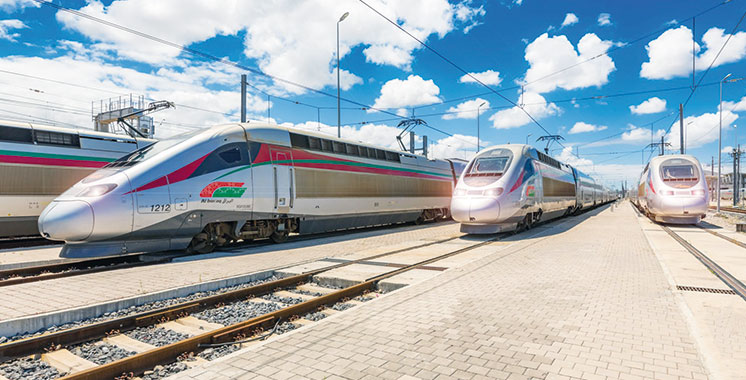
Morocco’s high-speed rail line between Kenitra and Marrakech is moving into a major construction phase, with heavy civil works underway as part of a 96 billion dirham national rail modernisation programme led by ONCF.
The 430-kilometre line is designed to improve travel times across key cities and support Morocco’s wider transport and economic strategy. Authorities say land acquisition and expropriation work is now almost finished, allowing construction to proceed at full speed.
Construction teams have already moved around 20 million cubic metres of earth along the route. Work is spread across multiple engineering sites.
Fifteen major viaducts are being built. Three covered trench sections are under construction in Zenata, Ain Atiq, and near Mohammed V International Airport.
There are also 92 overpasses and bridges underway to connect the new line with existing road and rail infrastructure.
Around 150 companies are working on the project, most of them Moroccan. The focus is on building domestic skills in rail engineering and construction while supporting local suppliers.
The rolling stock programme is worth 2.1 billion dollars and includes several international suppliers.
Alstom will supply 18 Avelia Horizon double-decker trains capable of speeds up to 320 km/h.
Hyundai Rotem will provide 48 electric trains and set up a local manufacturing plant in Morocco. CAF will supply 30 high-speed train units.
Alstom has also expanded its presence in Morocco with a 100 million dirham investment to upgrade its Fez facility, which produces train driver desks for export.
The rail project is part of Morocco’s infrastructure plan linked to its bid to co-host the FIFA World Cup 2030. The aim is to improve links between major cities and reduce travel times.
Once completed, the journey between Tangier and Marrakech is expected to take around 2 hours and 40 minutes, compared with more than five hours at present.
The new line will connect directly with Mohammed V International Airport, creating a combined rail and air transport hub. The system is designed to reduce road congestion and improve access to cities, including Rabat and Marrakech.
The project is part of a wider national plan to modernise transport and link Morocco’s northern and southern regions more efficiently.