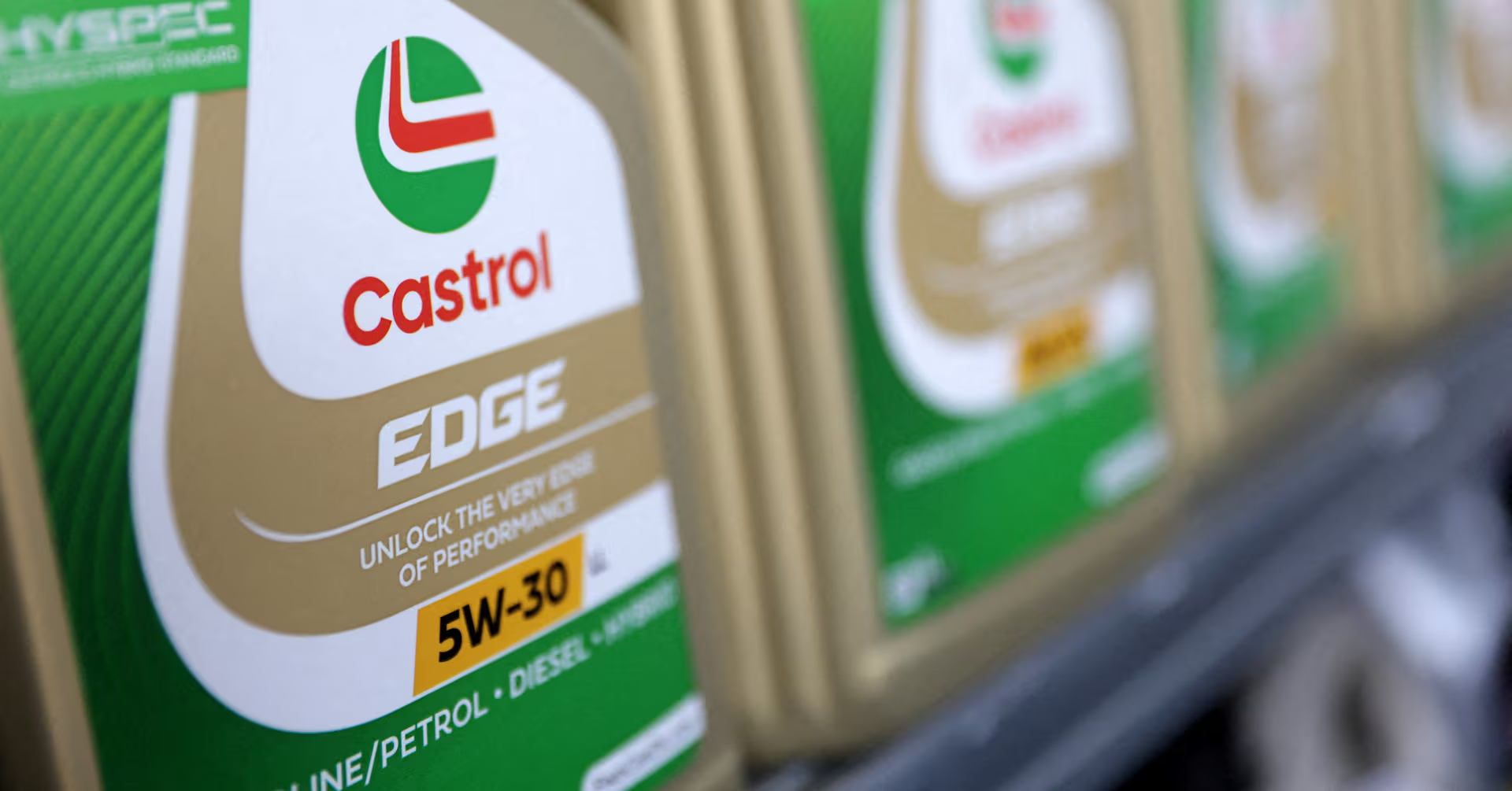
A major international deal between US investment firm Stonepeak and energy group BP is expected to change Morocco’s lubricants market, as control of the Castrol brand shifts.
Stonepeak, through its subsidiary Motion JVCo Limited, is set to take over BP’s global lubricants business, including Castrol, in a deal valued at about $10.1bn. The agreement covers 100% of Castrol Group Holdings Limited. BP will keep a 35% minority stake, while Stonepeak will hold a controlling 65%.
The deal is supported by up to $1.05bn from the Canada Pension Plan Investment Board. It is expected to be completed by the end of 2026, subject to regulatory approvals in several countries, including Morocco.
BP is selling part of the business as part of a wider plan to reduce debt and focus on a smaller set of core operations. The company is expected to raise around $6bn from the sale.
Stonepeak, which manages more than $83bn in assets, usually invests in infrastructure. The Castrol deal marks a move into fast-growing markets where industry and transport are expanding.
Impact in Morocco
Castrol already has a strong presence in Morocco, where it supplies lubricants to cars, factories and transport companies. Its products are widely distributed across the country and used in a growing vehicle market and expanding industrial sector.
Although the deal is global, it is likely to have local effects. Morocco is seen as an important market in North Africa, and Castrol gives Stonepeak an established position in a competitive sector.
Market trends and competition
Morocco’s lubricant market reached around 156.3 million litres in early 2026 and is expected to grow by about 4.29% a year until 2031.
Most demand comes from transport and vehicles, which make up around three quarters of the market. Engine oil is the main product.
Castrol competes with Afriquia Lubrifiants, which has a large network of fuel stations, as well as international companies such as TotalEnergies and Shell. Local brands like Ziz and Winxo also serve lower-priced parts of the market.
Industry changes
New industrial and energy projects in Morocco, including major solar developments, are increasing demand for specialist industrial lubricants.
At the same time, tougher environmental rules are pushing companies towards cleaner, fully synthetic oils rather than older mineral-based products.
Electric vehicles
The rise of electric vehicles is also changing the market. While they use less traditional engine oil, they need other fluids for cooling and electrical systems.
Stonepeak is expected to push Castrol to expand its electric vehicle product line as Morocco develops its own car manufacturing industry.
Wider outlook
The deal is part of a wider trend of investment firms targeting infrastructure and industrial supply chains in Africa. Morocco’s position as a trade hub could also help Castrol expand into West Africa in the future.
The transaction still needs regulatory approval, but is already seen as a major shift in ownership in the global lubricants industry.