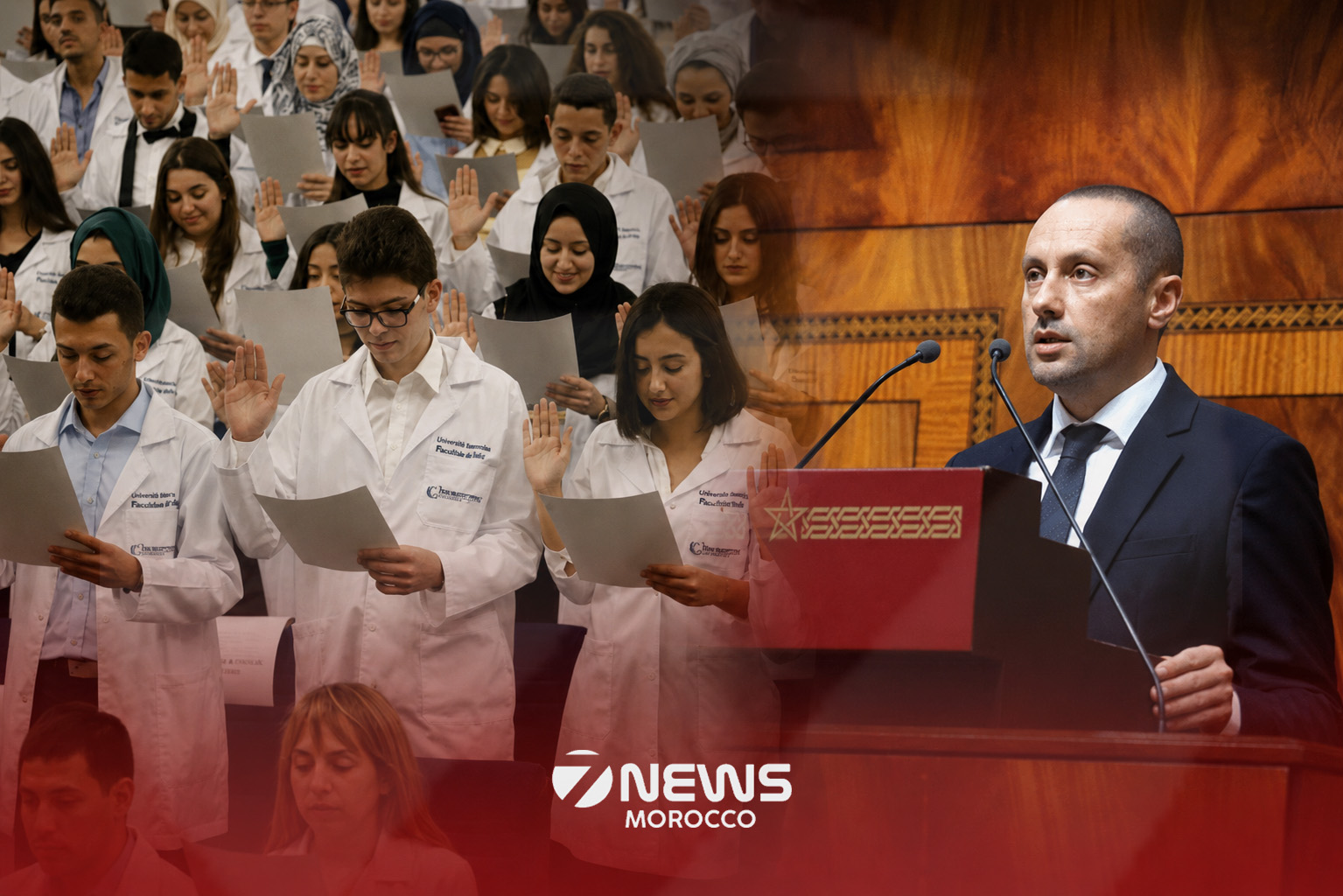
Morocco will send 530 newly qualified specialist doctors to public hospitals across the country from August to improve access to healthcare and tackle staff shortages.
Health Minister Amine Tahraoui announced the move in Rabat on Monday, saying it would end a long-standing problem that often left doctors waiting up to two years after graduation before starting work in public hospitals.
“The objective is to rapidly and tangibly strengthen healthcare delivery across the entire national territory,” he said.
Under new rules, all newly trained specialist doctors will have to work in the public sector for a set period after graduation. Doctors graduating in 2026 and 2027 will be required to serve for four years, while those graduating from 2028 onwards will serve for three years.
The reform ends 33 years of a system that allowed many specialists trained with public resources to leave the public sector soon after qualifying.
The government hopes the new rules will help send more doctors to regions that struggle to attract specialists.
Many rural and remote areas continue to face shortages in key fields such as cardiology, paediatrics, radiology and gynaecology, while specialists are largely concentrated in major cities such as Rabat and Casablanca.
Nearly 2,000 residency positions had been opened this year under the new system. Those doctors are expected to join public healthcare facilities from 2030. They will work within Morocco’s new Territorial Health Groups, known as GSTs, which are being created in the country’s 12 regions.
The GSTs will oversee the placement and training of doctors and help ensure medical staff are deployed where they are most needed. The system is also expected to align specialist training with the health needs of each region.
The government aims to increase the number of healthcare professionals to 25 per 10,000 inhabitants by 2026 and 45 per 10,000 by 2030.
To help meet that target, medical training has been shortened from seven years to six years, while new university hospitals are being developed in Agadir, Laâyoune and Errachidia.
The health sector continues to receive major public investment, with annual funding exceeding 30bn dirhams ($3bn) for hospitals, infrastructure projects and the recruitment of healthcare workers.