Nigeria has committed 473.8bn naira ($1bn) to its gas infrastructure company, with part of the money going towards the planned Nigeria-Morocco gas pipeline. The figure appears in NNPC Ltd’s audited financial statements for 2025, published on 5 October 2026. The loan was given to NNPC Gas Infrastructure Company, a wholly owned subsidiary of the Nigerian state oil company.
The loan covers three major projects: cash calls for the Nigeria-Morocco gas pipeline, construction of the Ajaokuta-Kaduna-Kano (AKK) gas pipeline and an equity investment in Anoh Gas Processing Company.
The accounts do not give the amount allocated to each project.
As of 31 December 2025, 14.4bn naira of the loan was still available to be drawn. The accounts also showed 25.7bn naira in accrued interest.
The figures give a clearer picture of the money Nigeria is putting into the long-planned gas pipeline, which is expected to link West Africa with Morocco and European gas markets.
A 6,800km gas route
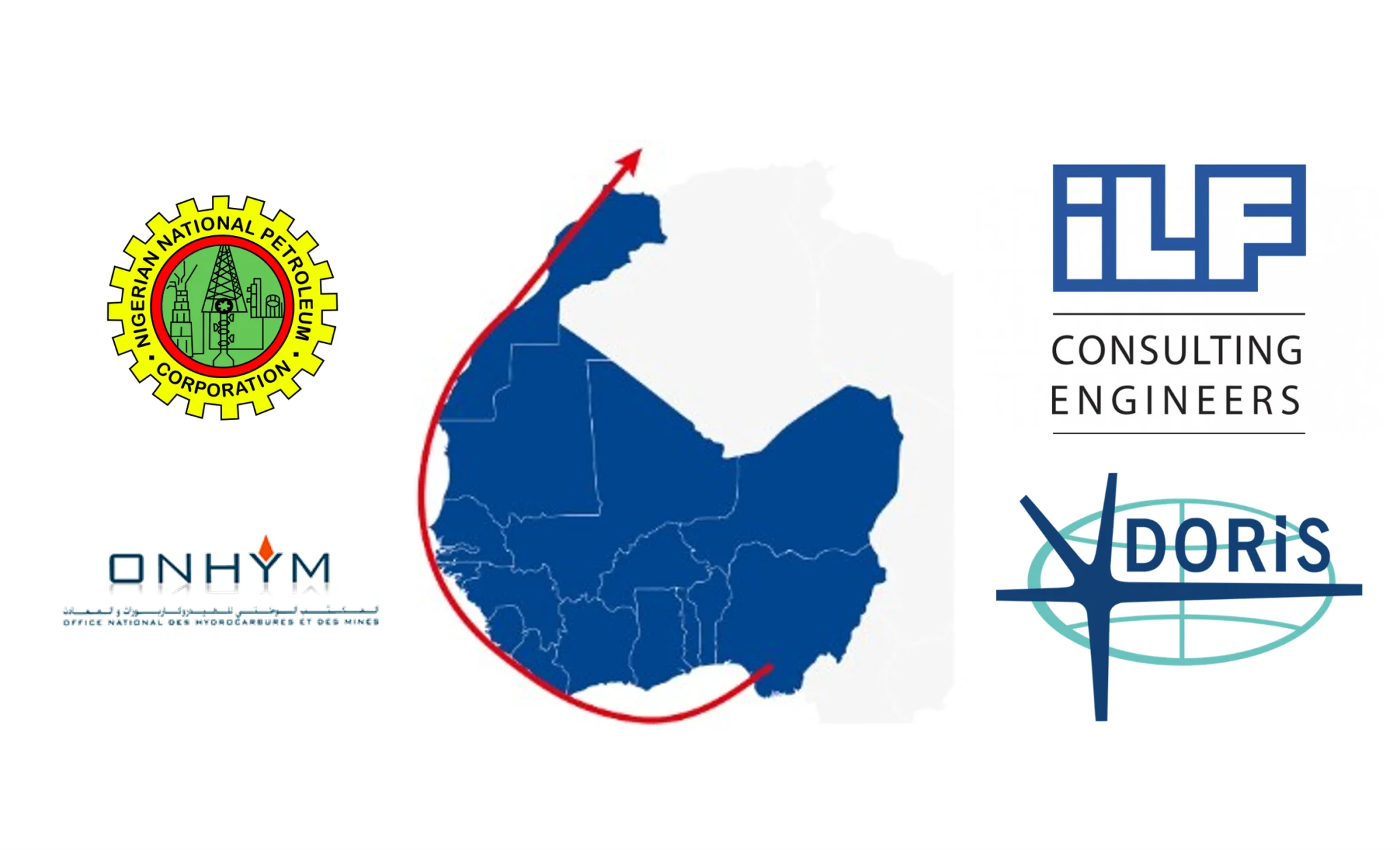
The African Atlantic Gas Pipeline, also known as the Nigeria-Morocco Gas Pipeline, is planned to run for about 6,800km to 6,900km along the Atlantic coast.
The route would pass through 13 West African countries: Nigeria, Benin, Togo, Ghana, Côte d’Ivoire, Liberia, Sierra Leone, Guinea, Guinea-Bissau, The Gambia, Senegal and Mauritania before reaching Morocco.
The pipeline would then connect to the existing Maghreb-Europe Gas Pipeline, which links northern Morocco with Spain. This would give the project a possible route into European markets, including Spain and Portugal.
The total cost is estimated at about $25bn-$26bn.
NNPC Ltd and the National Office of Hydrocarbons and Mines, known as ONHYM, are leading the project.
The two sides plan to use a 50:50 joint special-purpose vehicle to manage the project’s financing, construction and execution.
The project is being built in stages
The pipeline is not expected to be built as one continuous line from Nigeria to Morocco.
The plan is to develop separate sections that can operate independently and then connect them.
The first stage includes a northern link between Morocco and gas fields off Mauritania and Senegal. These include the Grand Tortue Ahmeyim gas field.
A second stage would expand the existing West African Gas Pipeline, which links Nigeria, Benin, Togo and Ghana, and extend the network towards Côte d’Ivoire.
A third stage would connect the different sections to create a continuous Atlantic gas route.
The project is designed to take gas from different sources. Nigeria would be the main supply source, while gas from offshore fields in Mauritania and Senegal could also enter the system.
ECOWAS agreement
A major step came on 19 July 2026, when ECOWAS member states signed the intergovernmental agreement for the African Atlantic Gas Pipeline in Freetown, Sierra Leone.
The agreement brings the participating countries under a common legal, commercial and operational framework.
It provides rules for cross-border gas transport, pipeline access, tariffs and coordination between the countries along the route.
A regional authority based in Nigeria is expected to oversee the system.
The pipeline is planned to operate under an open-access system. Different gas producers, buyers and commercial shippers would be able to use available capacity.
Transit charges would depend on the entry and exit points and the sections of pipeline being used rather than one single fee for the entire 6,800km route.
The countries hosting the pipeline would also receive payments for land access, maritime areas and rights of way.
Revenue from pipeline transport and capacity reservations would go through the joint project structure. Debt payments to international lenders would take priority before remaining revenue is distributed to participating state companies.
30bn cubic metres of gas a year
The pipeline is designed to eventually carry about 30bn cubic metres of gas each year.
The planned model divides this broadly into two parts.
About 15bn cubic metres would be available for domestic and regional use in West Africa and Morocco. The remaining 15bn cubic metres could be exported to Europe through the connection with the Maghreb-Europe pipeline.
Countries along the route are expected to have priority access for power plants and industries.
The gas could be used to replace diesel and heavy fuel oil in electricity generation and support industries such as fertiliser, cement and mineral processing.
The system could also take gas from new offshore discoveries in Mauritania and Senegal, allowing those countries to supply nearby markets or send gas further north.
Financing remains a major challenge
The 473.8bn-naira NNPC loan does not finance the entire $25bn-$26bn pipeline.
It provides internal funding for project activities, including cash calls, engineering work and equity commitments.
The project still needs large amounts of external financing.
Talks have been held with the US Export-Import Bank, the World Bank and other international financial institutions, including the Islamic Development Bank.
Youssef Amrani, the Moroccan ambassador to the US, confirmed discussions with US officials in July. The US Export-Import Bank also acknowledged preliminary talks.
The financing plan is expected to rely heavily on international project finance and a mix of debt and equity.
Why the pipeline matters to Nigeria
Nigeria has more than 200 trillion cubic feet of proven natural gas reserves.
The country still struggles to make full use of those reserves because of limited infrastructure. Gas is also flared when it cannot be processed or transported economically.
The Atlantic pipeline would give Nigeria another long-term export route while creating new markets for its gas across West Africa and Europe.
The project could also help Nigeria earn more from its gas resources and reduce dependence on a limited number of export routes.
What it means for West Africa
The pipeline is designed as more than an export route.
It would create a gas network linking 13 West African countries and could give countries along the coast access to a more reliable supply.
That could support electricity generation and industrial activity.
The project would also allow countries with new gas discoveries, particularly Mauritania and Senegal, to connect their resources to regional and European markets.
Morocco’s role
The pipeline would give Morocco another source of natural gas for its own energy needs.
It would also strengthen the country’s role as an energy link between West Africa and Europe.
The connection with the Maghreb-Europe pipeline is central to that plan. Gas arriving in Morocco could move through the existing system towards Spain.
The project therefore has both a regional and European dimension: supplying African markets while creating another route for gas to reach Europe.
Nigeria-Morocco pipeline versus Trans-Saharan pipeline
The Atlantic project is one of two major plans to move Nigerian gas towards Europe.
The other is Algeria’s Trans-Saharan Gas Pipeline, also known as the TSGP or Nigal.
The Trans-Saharan route would be about 4,128km long. It would run from Nigeria through Niger and Algeria before connecting with existing Algerian export systems to Europe.
Its estimated cost is lower, at about $10bn-$13bn.
The Trans-Saharan route could use existing connections to Italy through the TransMed pipeline and Spain through the Medgaz pipeline.
But it would cross large areas of the Sahara and the Sahel, where security and political risks remain important concerns.
The Atlantic route is much longer and more expensive. It avoids the central Sahara but has to coordinate regulations, tariffs and construction across 13 countries.
The Atlantic project also has the advantage of using existing regional infrastructure in stages, including the West African Gas Pipeline and the Maghreb-Europe pipeline.
From agreement to construction
The Nigeria-Morocco pipeline was first announced in December 2016, when King Mohammed VI and then-Nigerian President Muhammadu Buhari signed an agreement to develop the project.
Further memoranda of understanding were signed with ECOWAS and national oil companies in West Africa in September 2022.
NNPC provided the 473.8bn-naira loan facility to its gas infrastructure subsidiary during the 2025 financial year.
ONHYM confirmed in April 2026 that the project design had advanced, with first gas from the northern section targeted for 2031.
The ECOWAS intergovernmental agreement followed on 19 July 2026.
Full-scale physical construction is planned for 2028.
The latest NNPC accounts show that Nigeria has already put significant money into the project. They do not, however, show that the full $25bn-$26bn financing package has been secured.
The project remains in the engineering, legal and financing stages, with construction expected to become the next major test of whether the 6,800km gas corridor can move from agreements and funding commitments to reality.