Morocco is looking to put solar panels on top of its dams to save water and generate electricity at the same time. A new study looking at 58 dams across the country says the idea could make a real difference as Morocco deals with rising demand for energy.
The research found that Morocco’s reservoirs cover nearly 433 square kilometres and lose about 909 million cubic metres of water every year through evaporation. That is water simply disappearing into the air at a time when the country is already under serious water stress.
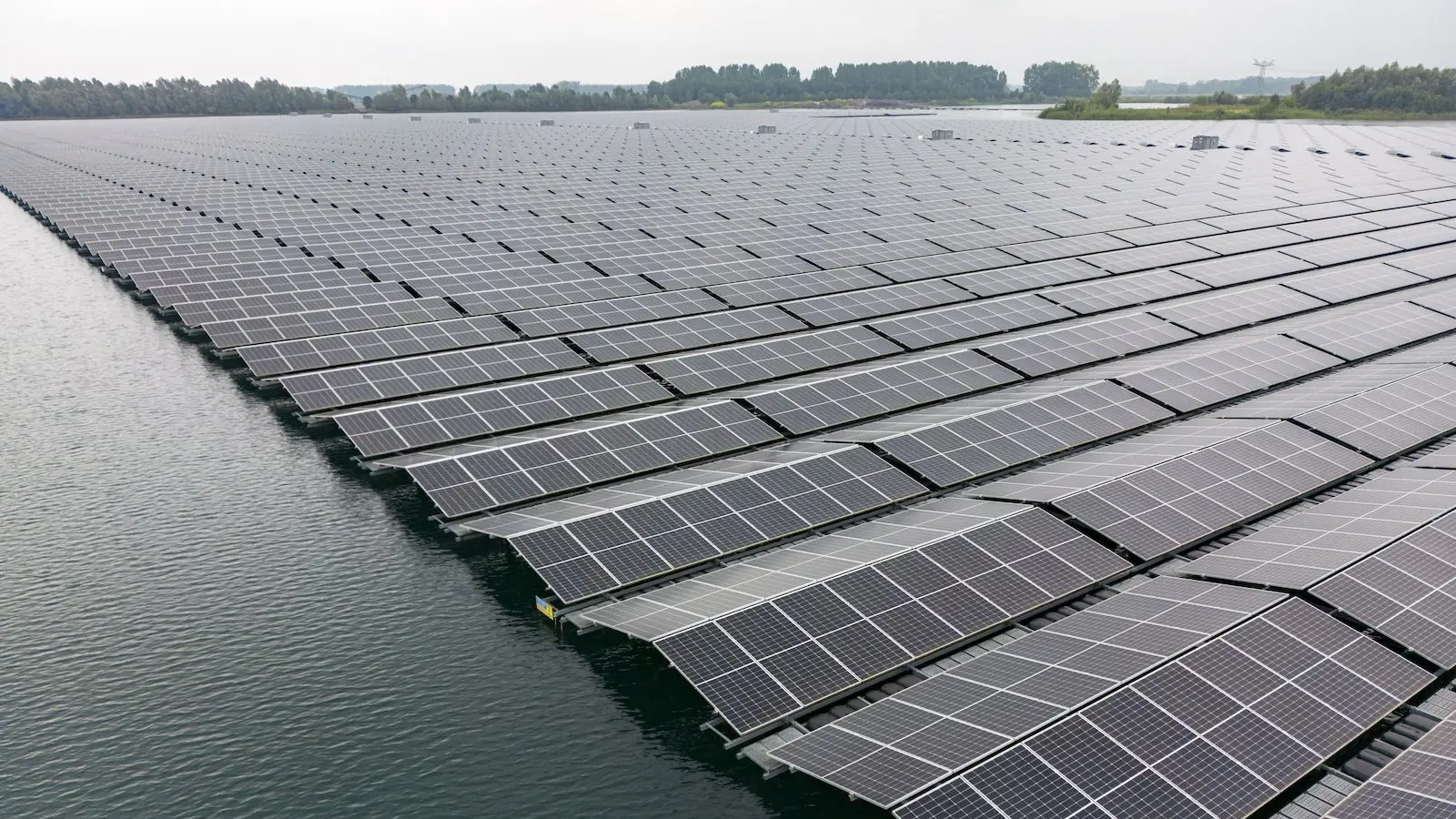
Floating solar panels could help reduce that loss while also producing clean electricity. The panels sit on the water and block sunlight, which helps slow down evaporation. The study suggests that even covering just 1% of dam surfaces could help the national electricity grid and still give a quick financial return.
Design matters too. The best performance comes when panels are tilted at about 31 degrees. But lower angles around 11 degrees also work well. These flatter setups are better for saving water and keeping the floating structures more stable.
Pilot projects are already running, including the Sidi Slimane floating solar plant and the Oued Rmel dam project near Tangier. The Oued Rmel site is expected to help power the Tanger Med port.
The country wants 52% of its energy to come from renewables by 2030. It also has more than 3,000 hours of sunshine each year, which gives it a strong natural advantage for solar power.
Floating solar works by placing solar panels on water instead of land. The panels sit on floating platforms usually made from strong plastic materials, and they are held in place with anchors or cables. Power is then sent to shore through underwater cables and fed into the electricity grid after being converted.
The technology is improving quickly. Some newer panels can collect sunlight from both sides, including light reflected off the water. Others can slowly turn to follow the sun during the day to produce more energy.
There is also a system where floating solar is combined with hydropower dams. During the day, solar panels produce electricity and help save water in the dam. At night or when it is cloudy, the dam releases water to generate power, which keeps electricity supply steady.
But there are challenges. Floating solar systems cost more to build than land-based solar farms. They also face wear and tear from water, including corrosion and algae growth. And if too much of a lake or dam is covered, it can affect plant and animal life in the water.
That is why Morocco’s approach is cautious. Covering only small parts of dam surfaces is meant to balance energy production with environmental protection.
The idea is already gaining attention around the world. China leads the sector with about 40% of global capacity, including major projects like the 1,000 megawatt Dongying HG14 solar farm.
India is also expanding fast with projects such as the 600 megawatt Omkareshwar floating solar plant and operational sites like the 145 megawatt Ramagundam and 101 megawatt Kayamkulam projects.
South Korea is working on a huge 1,200 megawatt project at Saemangeum, along with smaller installations like the 47.2 megawatt Imha Dam site.
Indonesia has the 192 megawatt Cirata floating solar plant, while Thailand runs a 45 megawatt system at Sirindhorn Dam and is building more hybrid projects.
Singapore’s 60 megawatt Tengeh Reservoir solar farm covers an area the size of 45 football fields and helps power water treatment plants.
In Europe, France has a 74 megawatt project called Les Îlots Blandin on a former quarry, while the Netherlands is also building similar systems on artificial lakes.