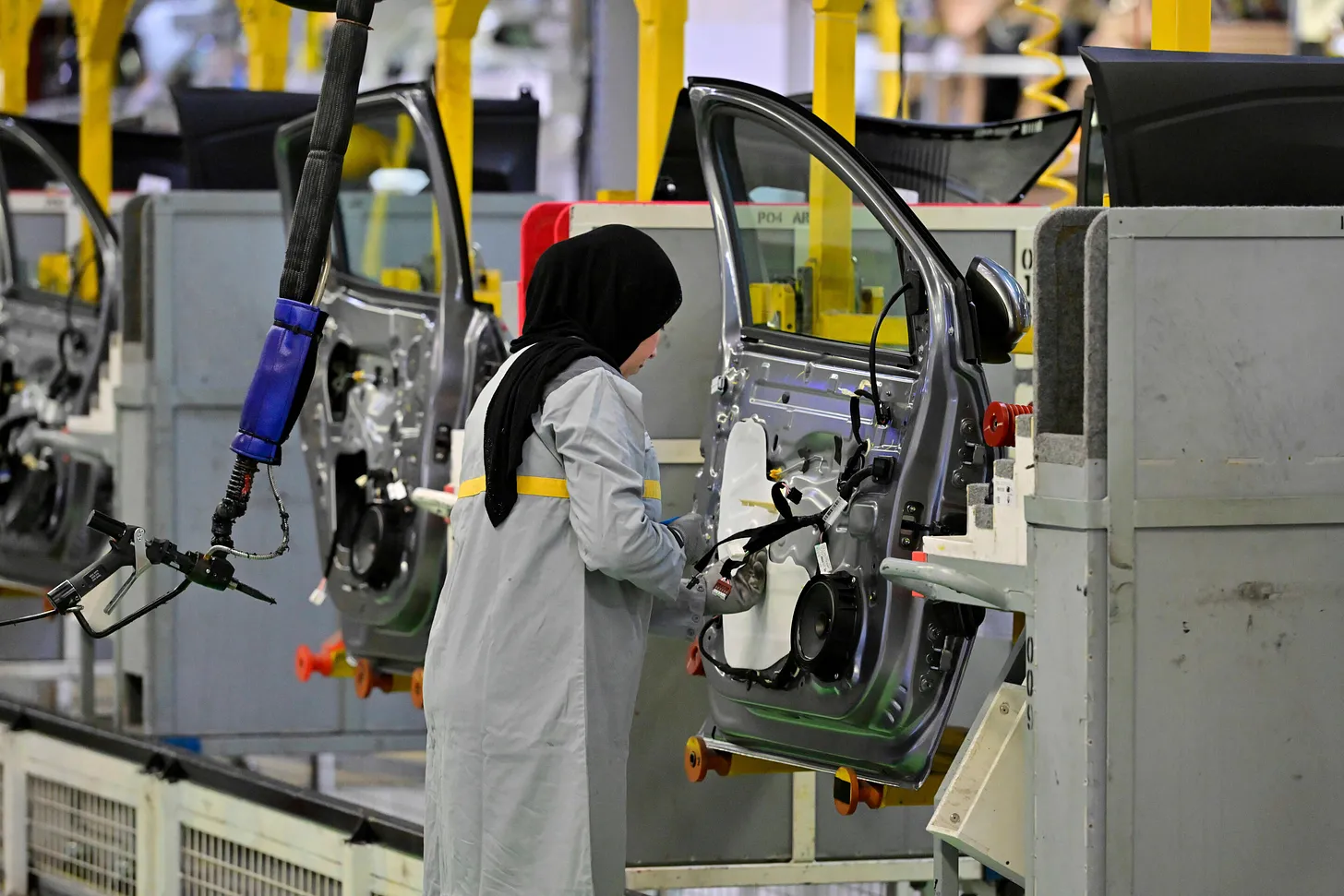
Factories across Morocco’s car industry had a strong start to the year, helping the country keep export growth in positive territory. New figures from the Office des Changes show automotive exports reached nearly 42bn dirhams by the end of March 2026, up 12.1% compared with the same period last year.
Two parts of the industry drove most of the rise. Vehicle construction exports jumped 23.7% to 16.88bn dirhams. Wiring systems, a major part of Morocco’s industrial base, increased 10.9% to 16.04bn dirhams. Analysts say this reflects stronger local manufacturing and deeper links to global supply chains.
The aeronautics sector also grew steadily. Exports reached 8bn dirhams by the end of March, a 12.6% increase. Assembly sales rose 18.6% and Electrical Wiring Interconnection Systems edged up 1.6%.
Some traditional export sectors struggled in the first quarter. Textile and leather exports fell 14.1%. Phosphates and derivatives dropped 7.4%. Electronics and electricity declined 4.7%. Agriculture and agri-food slipped 2.3%.
Overall exports still rose to 120.7bn dirhams by late March, a 3.3% increase year on year. The automotive sector provided most of the momentum.
The growth fits into a wider industrial plan focused on higher value and greener technologies. Morocco aims to increase vehicle production capacity from around 700,000 units in recent years to 1.5 million annually by the end of 2026. The plan also targets an 80% local integration rate.
Electric vehicle production is a key part of the strategy. Morocco currently produces about 40,000 small electric vehicles each year, including the Fiat Topolino and Citroën Ami. Industry Minister Ryad Mezzour has set a goal of reaching 107,000 units annually.
To support this shift, Morocco is building a full battery supply chain. In 2026, an LFP cathode materials plant began mass production through a joint venture between LG Chem of South Korea and China’s Huayou Group. The facility is expected to produce materials for 500,000 EV batteries a year.
New investments continue to arrive. Projects include the Gotion High-Tech gigafactory and the COBCO lithium-ion plant in Jorf Lasfar. These developments position Morocco as a major non-EU automotive exporter to Europe.
The sector is also tied to renewable energy plans. Morocco aims to generate 52% of its electricity from renewable sources by 2030, a target seen as important for European manufacturers seeking to cut supply-chain emissions.
“The Moroccan industrial platform is no longer just a destination for assembly; it is becoming a center for innovation and green manufacturing,” noted one industrial policy report on the Mediterranean trade corridor.
Despite declines in textiles and phosphates, investment in automotive and aeronautics suggests a long-term strategy to move Morocco further up the global value chain.